Blogs
Budget 2026: What It Means for UK Restaurants


The Chancellor delivered the Autumn Budget on 28 October 2026. For restaurants, there was one clear win, a pay bill that keeps rising, and silence on the VAT cut the industry asked for.
This guide explains each change in plain English: what changed, what it will cost you, three things to do this month, and how Favouritetable will help you protect your margin.
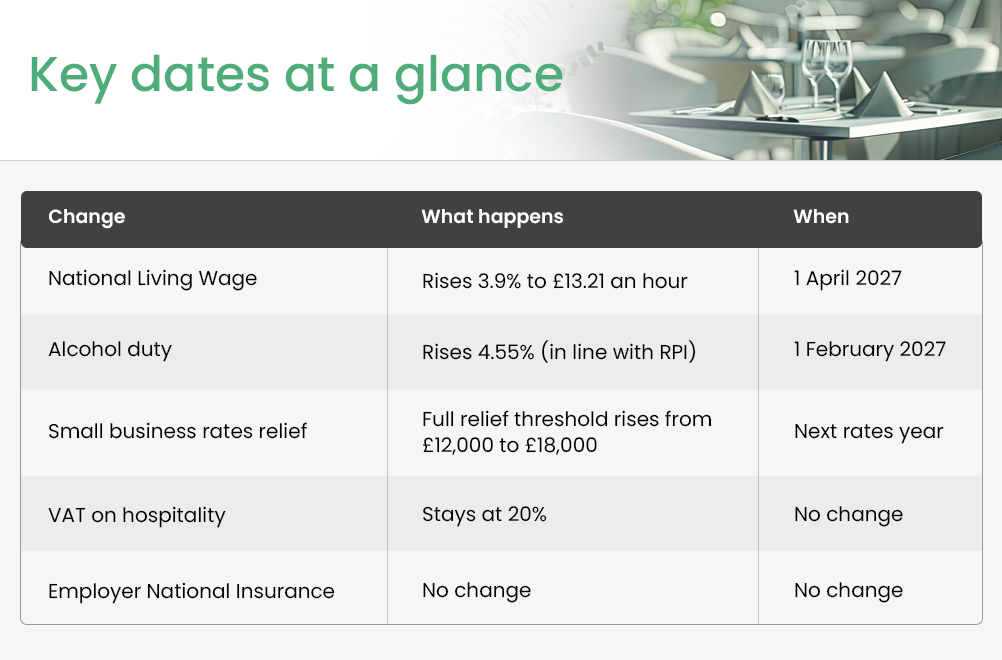
Key dates at a glance
1. The National Living Wage rises to £13.21
What changed: From 1 April 2027, the National Living Wage rises 3.9% to £13.21 an hour.
What it costs you: About £910 a year for every full-time worker on the wage floor. A team of 10 full-time staff adds about £9,100 a year before any knock-on rises for supervisors who need to stay ahead of the floor.
What to do this month:
Map your rota against covers for every service. Find the shifts where staff outnumber guests.
Budget for pay differentials, not just the minimum. Your best people will expect to stay ahead.
Count the paid hours lost to phones, diary juggling and manual confirmations.
How Favouritetable will help: Guests will book online, around the clock, straight into your diary. Automated confirmations and reminders will replace phone calls, and your table plan will show exactly how busy each service is, so you will rota to real demand instead of guesswork.
2. VAT stays at 20%
What changed: Nothing. Despite more than 400,000 signatures on the #VATsTheProblem petition, hospitality VAT stays at 20%.
What it costs you: One pound in every six that a guest spends still goes to HMRC. That leaves little room for anything else to take a cut from the bill.
What to do this month:
Check every fee you pay per booking, per cover or per order.
Review menu pricing on your highest-volume dishes. Small, targeted rises are easier to absorb than blanket ones.
Push guests to book direct through your own website and social channels.
How Favouritetable will help: You will pay no commission and no per-cover fees on bookings. Busier nights will not mean bigger bills from your booking system, so more of every pound stays with you.
3. Business rates relief rises to £18,000
What changed: This is good news. The threshold for full small business rates relief rises from £12,000 to £18,000, with tapered relief between £15,000 and £21,000. The government says about 3,900 more restaurants will pay no business rates at all. Bills above the relief band are frozen in real terms for two years.
What it costs you: If your rateable value is £18,000 or less, you should pay nothing. If it is higher, you still pay. The freeze helps, but the bill does not disappear.
What to do this month:
Find your rateable value on the GOV.UK “Find a business rates valuation” service.
If you are between £15,000 and £21,000, check what tapered relief you are owed.
If you still pay rates, work out what each table costs you per service. Empty tables cost exactly the same as full ones.
How Favouritetable will help: Our table management will help you fit more covers into each service: combining tables, filling gaps and turning tables on time. Your rates bill will not shrink, but you will earn more from the space you are paying for.
4. Alcohol duty rises 4.55%
What changed: From 1 February 2027, alcohol duty rises 4.55%, in line with RPI.
What it costs you: Your suppliers will pass the rise on. This makes every high-spend drinks table more valuable, and every no-show more expensive. A party of four that does not turn up on a Saturday is not just an empty table. It is the wine, cocktails and second round you have stocked for and will never sell.
What to do this month:
Review supplier prices now and agree prices before February where you can.
Re-cost your drinks list so each serve keeps its margin.
Introduce a clear no-show policy for peak nights and large groups.
How Favouritetable will help: You will be able to take deposits or card details at the time of booking, and automated reminders will go out before every reservation. Guests who might have forgotten will turn up, or cancel early so you can re-sell the table.
5. Beyond the Budget: delivery app commission
What changed: Nothing in the Budget. But for many restaurants, delivery commission is a bigger cost than any tax change. Third-party apps typically charge 20–30% of every order.
What it costs you: On a £30 delivery order, a typical 20–30% commission means £6–£9 never reaches you. The app also keeps the customer’s details, so it is the app’s customer, not yours.
What to do this month:
Work out what you paid in delivery commission over the last three months.
Put your own ordering link on your website, Google profile and social bios.
Add a “order direct next time” card to every delivery bag.
How Favouritetable will help: Your guests will order direct, commission-free, and their details will stay with you. You will be able to bring them back for a sit-down meal, rather than paying an app to reach them again.
Your 90-day action checklist
Now (November)
Check your rateable value and any relief you are owed
Add up what you paid in booking fees and delivery commission this year
Map staffing against covers for every service
By January
Agree drinks prices with suppliers before the 1 February duty rise
Re-cost your drinks list and top-selling dishes
Introduce deposits for peak nights and large groups
By March
Budget for the £13.21 wage floor and pay differentials
Rebuild your April rota around real booking data
Move as many bookings and orders as possible to your own channels
Why restaurants choose Favouritetable
No commission. No per-cover fees. Ever.
18M+ bookings and 62M+ diners served
Rated 5/5 on Capterra
UK-based hospitality experts who understand your business
The Budget has set your costs for 2027. Favouritetable will help you keep more of every booking.

Sources: HM Treasury, Autumn Budget 2026 (GOV.UK); House of Commons Library; MHCLG Business Rates Information Letter 8/2026. Delivery commission rates are typical industry figures and vary by provider and contract. This guide is for general information and is not tax or financial advice.